Good firewood is properly dried, clean, stored to stay dry, and split to a practical size for your appliance. Species affects burn characteristics, but wet premium hardwood will usually perform worse than appropriately dried wood.
Most homeowners don’t realize their wood stove can only perform as well as the wood they put in it.
When choosing firewood for a modern wood stove, the most important issue isn’t the species—it’s the moisture content.
When we talk about ‘wet’ firewood, we’re not talking about wood that simply got rained on. We’re talking about moisture still trapped inside the wood.
Firewood needs time to season. Cut it, split it, stack it with good airflow, and protect it from rain and snow without wrapping the entire stack and trapping moisture.
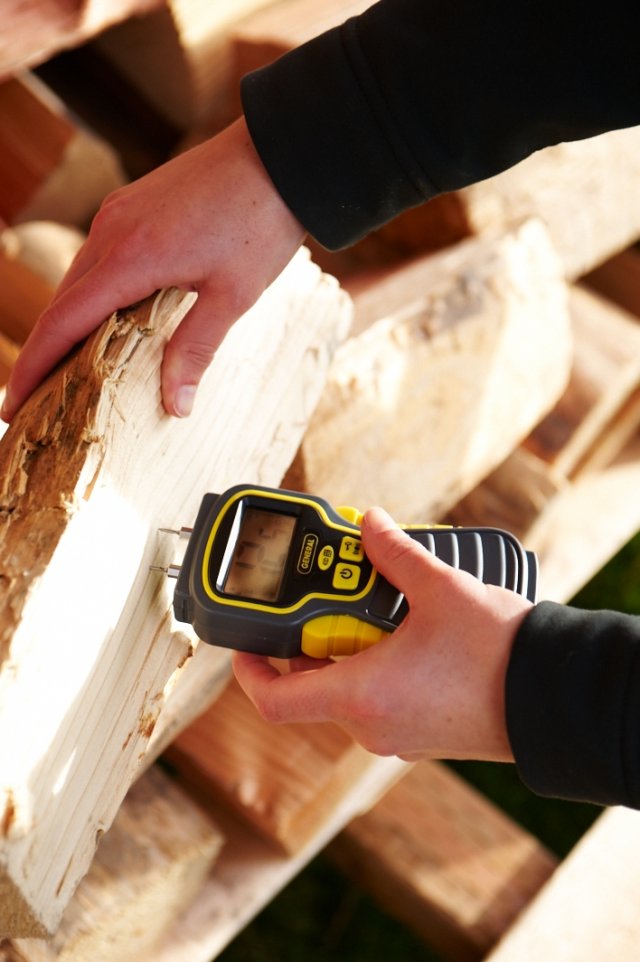
How do you know when it’s ready?
Use a moisture meter. Split a piece of firewood and test the freshly exposed face—not simply the outside of the log. Insert the probes into the wood grain and follow the instructions for your meter.
The U.S. EPA’s Test Your Wood with a Moisture Meter flyer says firewood is ready to burn below 20% moisture content and shows that wood burns most efficiently between 15–20% moisture content.
Why moisture matters
According to the EPA flyer, dry, seasoned wood is easier to start and burn hot, can use less wood to produce the same amount of heat, and helps reduce creosote buildup. Wood with high moisture content produces less heat and more smoke and creosote.
Seasoning your firewood
The EPA flyer recommends splitting, stacking, covering and storing firewood for at least 6–12 months. Actual drying time can vary with the wood, climate, split size, storage and airflow, so the moisture meter is a better final check than relying on time alone.
Dry wood. Better fire. Better performance.
EPA resource
View the U.S. EPA: Test Your Wood with a Moisture Meter flyer (PDF)
Always follow the instructions provided by your wood-stove manufacturer.
The practical details
Why this matters
- Excess moisture makes ignition and clean combustion harder and sends useful heat into evaporating water.
- Split size affects how quickly a load lights, releases heat, and settles into a longer burn.
- Covered top storage with airflow is generally more useful than tightly wrapping a pile where moisture cannot escape.
- A moisture reading is most meaningful on a freshly split interior face and should be interpreted with the appliance guidance.
Take this list with you
Ask your dealer
These questions are meant to start a complete, model-specific conversation—not to test or second-guess a qualified professional.
- When was the wood split, and how has it been stored?
- Is the split size appropriate for my firebox and the kind of burn I want?
- How will I verify moisture before loading the stove?
- Does my manual restrict fuels or give specific fuel recommendations?
Further reading
Helpful resources
Reserved for a verified NFI article, training reference, or certification resource relevant to this topic.
Space for approved manuals, diagrams, and the exact sections consumers should discuss with a dealer.
Add an annotated detail that explains relationships without becoming an installation tutorial.
Add a concise explanation, walk-through, or dealer interview.